

.jpg "How Real Readers Are Applying Buffett's Lessons from 'Oracle of Omaha'")
Oracle of Omaha: Warren Buffett
.jpg "How Real Readers Are Applying Buffett's Lessons from 'Oracle of Omaha'")
Introduction: From Theory to Transformation
It’s one thing to read about
Buffett's lessons; it’s another entirely to live them. Countless books have been written about Warren Buffett’s wisdom, filled with his timeless quotes and investment principles. But the critical question for any reader is: "How do I actually use this?"
Sam Gardner’s book, "Oracle of Omaha: Warren Buffett," has resonated deeply because it does more than just explain Buffett's lessons—it makes them accessible and actionable. It frames Buffett’s genius not as an untouchable mystery, but as a set of learnable habits and a durable mindset.
Author: Sam Gardner Genre: Biography Language: English Pages: 217 Formats: Kindle, Paperback, Hardcover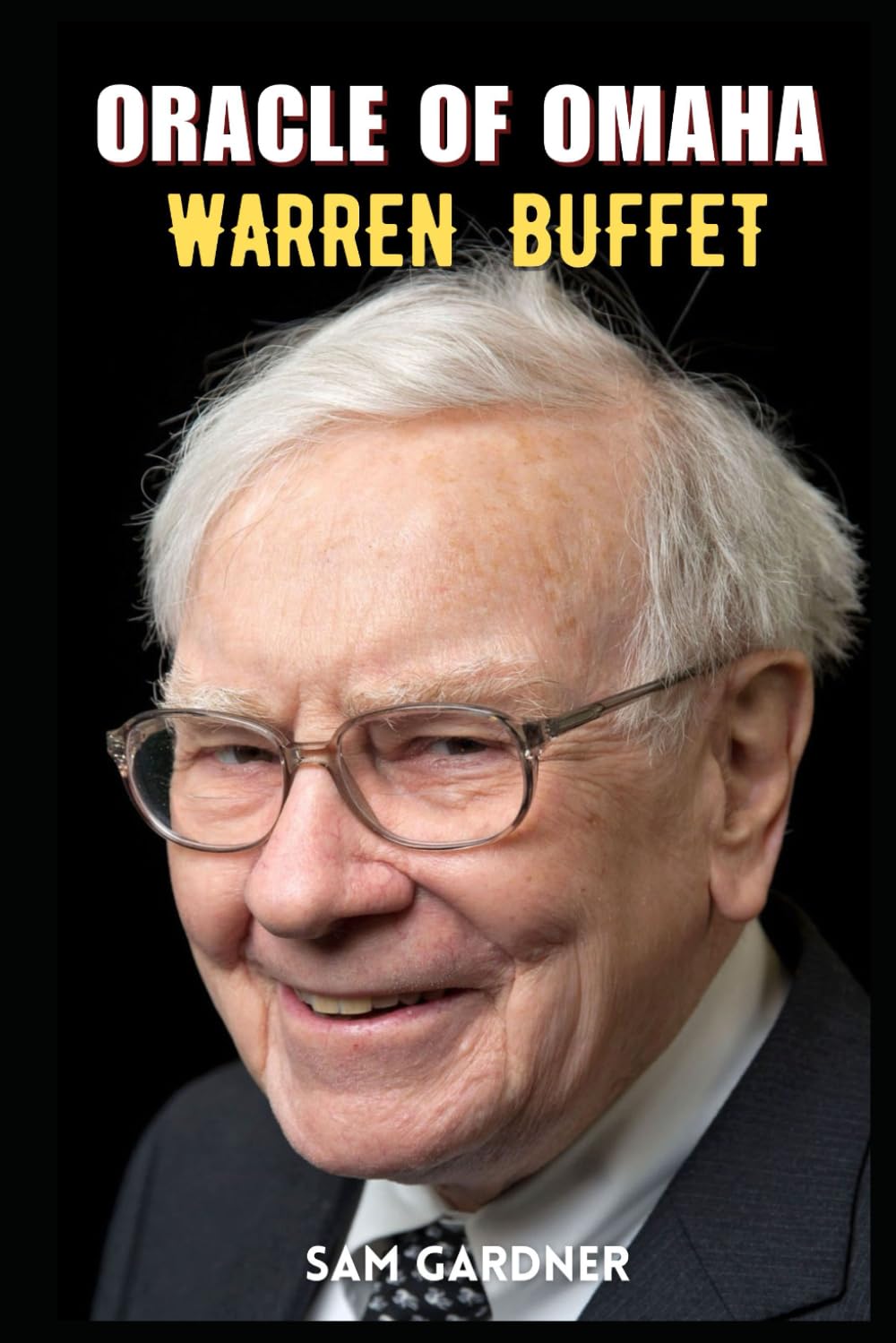
Oracle of Omaha: Warren Buffett
This article isn't just about what the book says. It's about what happens next. We've gathered insights and stories (inspired by real-world applications) that showcase how readers are integrating
Buffett's lessons into their daily financial decisions, business strategies, and personal lives. This is a look at the living legacy of Buffett's wisdom, facilitated by Gardner's clear-eyed guidance.
Oracle of Omaha: Warren Buffett
How Real Readers Are Applying Buffett's Lessons from 'Oracle of Omaha'
1. The Mindset Shift: From Speculator to Business Owner
Perhaps the most profound of Buffett's lessons is the fundamental shift from viewing stocks as ticker symbols to seeing them as ownership stakes in real businesses.
Oracle of Omaha, the concept of "If you aren't thinking about owning a stock for ten years, don't even think about owning it for ten minutes" hit her like a lightning bolt.
The Application:
- New Research Method: Instead of starting with a price chart, Sarah now starts with a company's annual report and competitor analysis. She asks: "Do I understand what this business does? Would I be happy to own the entire company?"
- The "Forever" Filter: Before buying, she now asks, "Can I envision this company being stronger and more valuable in 10 years?" This simple question has stopped her from making impulsive buys based on hype.
- Result: Her portfolio turnover has plummeted. Her stress levels have dropped, and she feels more like a calm business owner than a frantic day-trader. She’s built a small collection of companies she genuinely believes in.
2. Taming the "Inner Investor": The Mr. Market Framework
Gardner’s explanation of Buffett’s "
Mr. Market" allegory is a recurring theme in reader feedback. This lesson provides an emotional toolkit for navigating market volatility.
The Application:
- Personifying the Market: David internalized the idea of Mr. Market as an emotional business partner. When the market plunges and headlines scream panic, he now tells himself, "Mr. Market is having one of his depressive episodes. He's offering me wonderful businesses at a discount. This is not a time to fear, but to be cautiously greedy."
- A Plan, Not a Panic: He and his financial advisor established a plan to systematically invest a portion of his cash during downturns. This disciplined approach, inspired by Buffett's lessons, has transformed his fear into a sense of opportunity.
- Result: David feels a sense of control he never had before. He no longer sees volatility as a threat, but as the natural rhythm of the market that can be used to his advantage.
3. Building Economic Moats in Personal Careers
One of the most creative applications of Buffett's lessons isn't in investing at all—it's in career management. Readers are using the concept of a "moat" to future-proof their professional lives.
The Application:
- Identifying His Moat: Ben asked himself, "What is my durable competitive advantage?" He realized it wasn't just his coding skill, but his deep domain knowledge in the healthcare sector and his ability to explain complex tech concepts to non-technical stakeholders (a "network effect" and "brand" moat).
- Widening the Moat: He deliberately took on projects that strengthened this combination. He authored articles on healthcare tech, spoke at niche conferences, and mentored junior developers in his specific domain. He invested in himself, echoing Buffett's advice that "The most important investment you can make is in yourself."
- Result: Ben has become the go-to expert in his niche. He receives recruiter inquiries for roles that are a perfect fit, commands a premium salary, and has job security not based on a single skill, but on a unique, valuable combination.
4. The Rule of "Circle of Competence" in Side Hustles
Many aspiring entrepreneurs leap into businesses they know nothing about because they seem profitable. Buffett's lessons on staying within one's circle of competence have guided readers toward more successful ventures.
The Application:
- Defining the Circle: After reading Oracle of Omaha, Chloe sat down and honestly assessed her circle of competence. She was an avid gardener and a fantastic home cook. She understood the pain points and passions of that community.
- Pivoting the Business: Instead of t-shirts, she started a small business selling curated heirloom seed kits and accompanying recipe cards. She was operating squarely within her circle.
- Result: Because she spoke the language of her customers and understood their needs, her marketing was authentic and effective. Her business was profitable within six months, far outperforming what her generic t-shirt store would have likely achieved.
5. Financial Discipline: The "Margin of Safety" in Personal Budgeting
The principle of a "
Margin of Safety"—buying at a significant discount to intrinsic value—is being applied to personal spending and large purchases.
The Application:
- Price vs. Value: They remembered "Price is what you pay. Value is what you get." They focused on finding a house that met their core needs (value) in a neighborhood they could afford, rather than the most expensive house the bank would allow (price).
- Creating a Personal Margin of Safety: They deliberately bought a home that required a mortgage payment equal to only 25% of their take-home pay, well below the recommended 35-40%. This financial buffer is their personal "Margin of Safety."
- Result: This buffer has given them incredible peace of mind. When unexpected expenses arise or the economy wobbles, they are not house-poor. Their financial stress is low, allowing them to continue investing for their future.
Conclusion: Your Turn to Apply the Lessons
As these stories show, Buffett's lessons, as articulated in Sam Gardner's "Oracle of Omaha," are not rigid rules for a bygone era. They are a flexible, powerful framework for making smarter decisions with your money, your career, and your life.
The book doesn't just tell you to "be fearful when others are greedy"; it gives you the mental model of Mr. Market to understand how. It doesn't just tell you to "invest in what you know"; it guides you to define your own circle of competence.
The transformation from a passive reader to an active applier of wisdom is the greatest value any book can provide. These readers are living proof that the Oracle's wisdom is as relevant as ever.
Call to Action: Start Your Own Transformation
Are you ready to move from simply knowing Buffett's lessons to truly applying them? To stop wondering what to do and start putting a proven philosophy into practice?
The journey begins with a deep and practical understanding. Sam Gardner’s "Oracle of Omaha: Warren Buffett" is your essential guide.
Affiliate Disclaimer: This blog is a participant in the Amazon Services LLC Associates Program, an affiliate advertising program designed to provide a means for sites to earn advertising fees by advertising and linking to Amazon.com. As an Amazon Associate, we earn from qualifying purchases. This means that if you click on an affiliate link and purchase the item, we may receive a small commission at no extra cost to you. We only recommend products and services that we believe will provide value to our readers. Thank you for your support.


.jpg)

.jpg)


No comments:
Post a Comment